


Every year, one question confuses millions of students preparing for CBSE, ICSE, and ISC board exams:
“Should I study only NCERT (or my prescribed textbook), or should I also use reference books?”
Many students believe that buying more books automatically leads to better marks. In reality, having too many resources often creates confusion, wastes time, and leaves the syllabus incomplete.
The truth is that success in board exams depends less on the number of books you own and more on how effectively you use them. In this guide, we’ll help you understand when NCERT is enough, when reference books become useful, and how to choose the right study strategy to score high in your board exams.
Why NCERT Is So Important
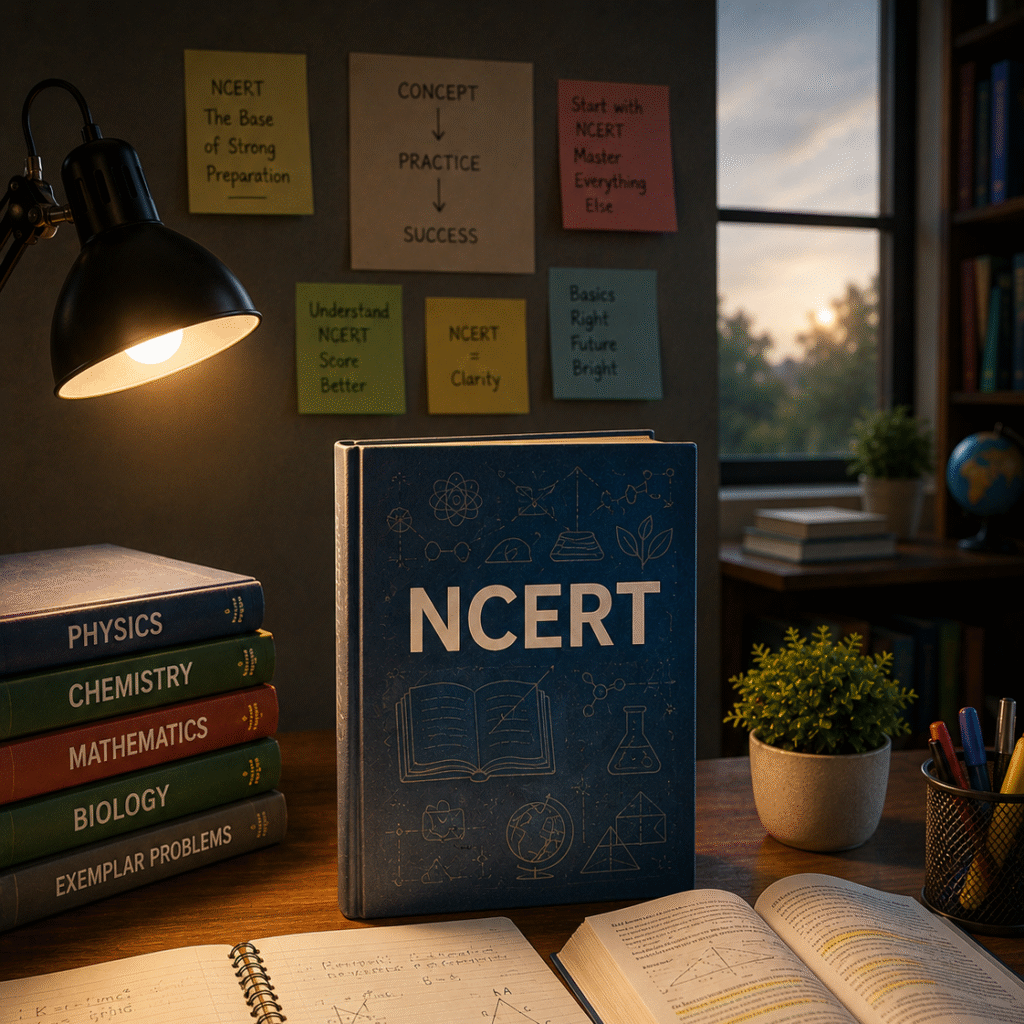
For CBSE students, NCERT textbooks form the backbone of board exam preparation. A large number of questions are directly or indirectly based on NCERT concepts, examples, exercises, diagrams, and definitions.
Even for competitive exams like JEE and NEET, a strong understanding of NCERT is considered essential.
ICSE and ISC students should similarly focus first on their prescribed textbooks, as board questions are designed around the official curriculum.
Before thinking about additional books, ensure that you can confidently explain every concept from your primary textbook.
What Are Reference Books?
Reference books are designed to provide additional practice, detailed explanations, higher-level questions, and different methods of solving problems.
They can help students:
- Practise a wider variety of questions
- Improve conceptual understanding
- Prepare for competency-based questions
- Strengthen problem-solving skills
- Build confidence before examinations
However, reference books should supplement your preparation—not replace your prescribed textbooks.
When Is NCERT Alone Enough?
For many students aiming to score well in board exams, thoroughly mastering NCERT (or the prescribed textbook) is sufficient.
NCERT is generally enough if you:
- Understand every chapter clearly
- Solve all textbook exercises
- Complete exemplar or additional questions where applicable
- Practise previous year question papers
- Solve official sample papers
- Revise regularly
Students who complete these steps consistently often perform exceptionally well without studying from multiple reference books.
When Should You Use Reference Books?
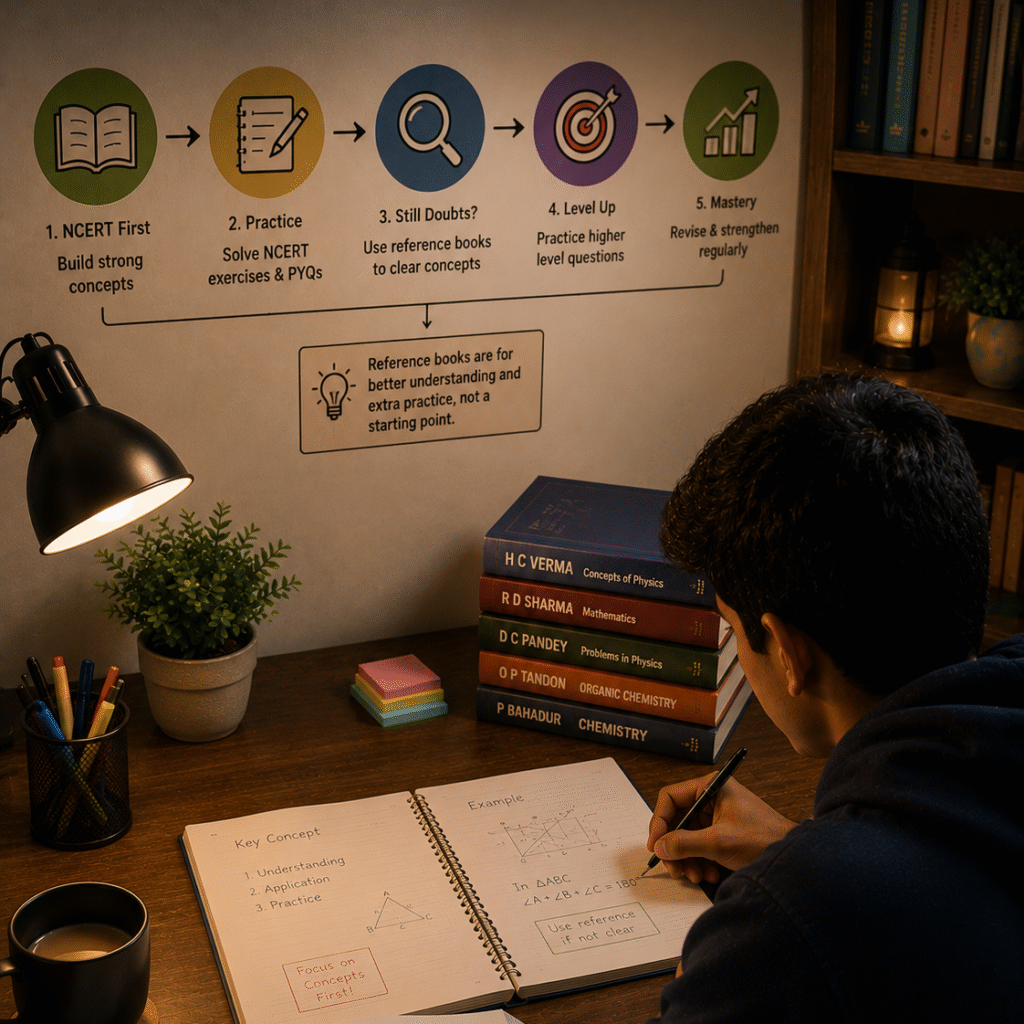
Reference books become valuable after you’ve built a strong foundation.
Consider using them if you:
- Have already completed your syllabus
- Want additional question practice
- Are preparing for both board exams and competitive exams
- Need more detailed explanations for difficult topics
- Want to improve your speed and accuracy
Using reference books before mastering the basics can lead to unnecessary confusion and information overload.
The Biggest Mistake Students Make
One of the most common mistakes is collecting several books for the same subject.
For example, a student may own multiple Mathematics or Science books but never complete even one properly.
This approach creates stress because every book presents concepts differently, making revision difficult.
Instead of reading five books halfway, it’s far better to master one textbook completely and then practise from one carefully selected reference book if required.
Remember:
Depth of learning is always more valuable than the number of resources you use.
Previous Year Papers Matter More Than Extra Books
Once you’ve completed your textbook, your next priority should be solving previous year question papers and official sample papers.
These resources help you:
- Understand the actual board exam pattern
- Identify frequently asked topics
- Improve answer-writing skills
- Build confidence under exam conditions
- Learn effective time management
Students can use BoardsDaddy to access official previous year question papers, sample papers, syllabi, and important board updates in one organised platform. Having reliable resources in one place allows students to spend less time searching and more time practising.
A Smart Study Strategy
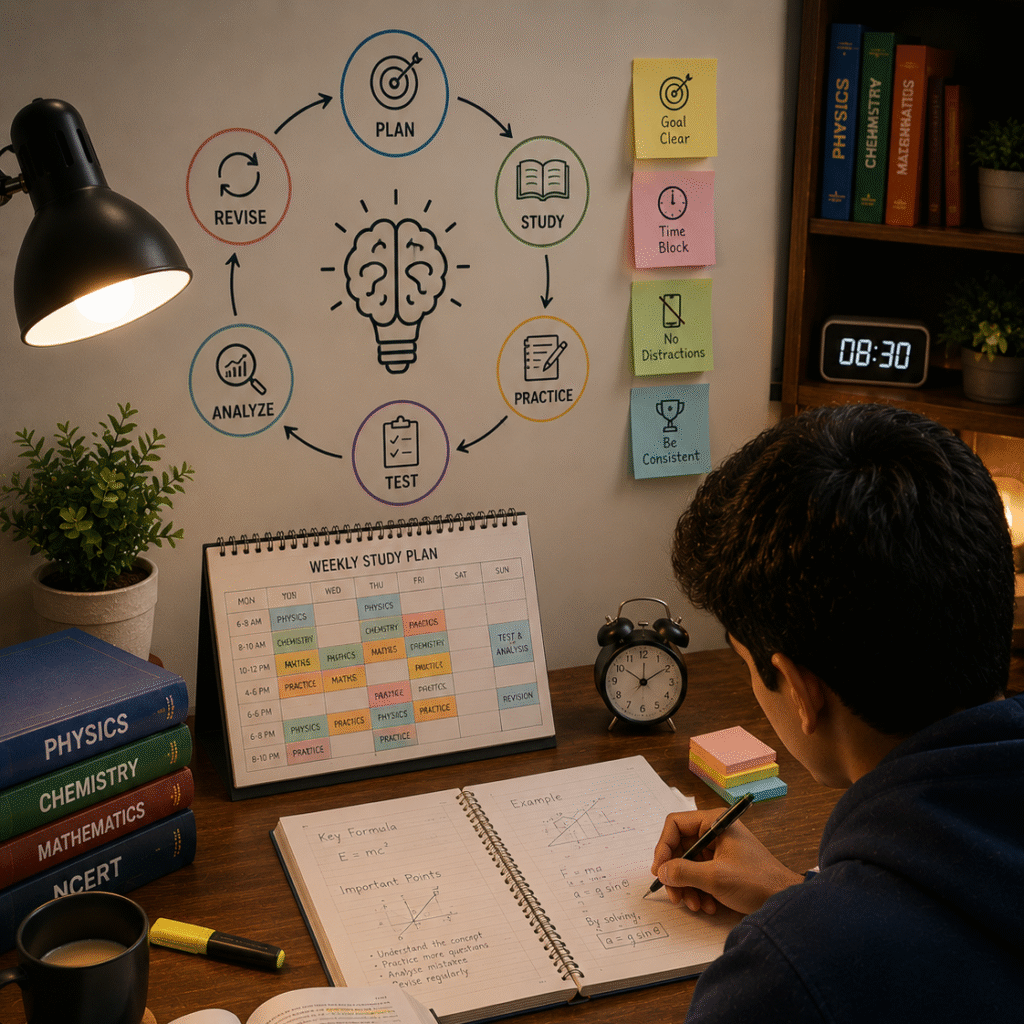
A balanced preparation strategy looks like this:
Step 1: Master your prescribed textbook (NCERT for CBSE or the official textbook for ICSE/ISC)
Step 2: Make concise notes and revise regularly
Step 3: Solve textbook exercises thoroughly
Step 4: Practise previous year question papers
Step 5: Solve official sample papers
Step 6: If additional practice is needed, use one good reference book—not several
Following this sequence helps students build strong concepts before moving on to advanced practice.
How Igniters for Tomorrow Helps Students Study Smarter
Many students don’t struggle because they lack study material—they struggle because they don’t know what to study first.
This is where Igniters for Tomorrow makes a difference.
Rather than encouraging students to collect multiple books, Igniters for Tomorrow focuses on concept-based learning, personalised mentorship, and structured study plans. Students are guided on when to complete their textbooks, when to practise questions, and when additional reference material is genuinely beneficial.
Because every student learns differently, personalised guidance helps eliminate confusion, reduces unnecessary workload, and allows students to prepare with confidence instead of pressure.
Since BoardsDaddy is an initiative of Igniters for Tomorrow, students also gain access to official board resources, helping them follow a systematic preparation strategy from syllabus completion to final revision.
Conclusion
The debate between NCERT and reference books isn’t about choosing one over the other—it’s about using each resource at the right stage of preparation.
For most board exam students, the prescribed textbook should always be the first priority. Once you’ve mastered it, previous year papers, sample papers, and selective reference books can help strengthen your preparation further.
Remember, excellent results don’t come from studying the most books—they come from understanding concepts deeply, revising consistently, and practising intelligently. A focused approach will always outperform a crowded bookshelf.
Leave a Reply